Preparing Your Home for Safe Senior Living
May 29, 2026 · Administrator · Updated June 2, 2026
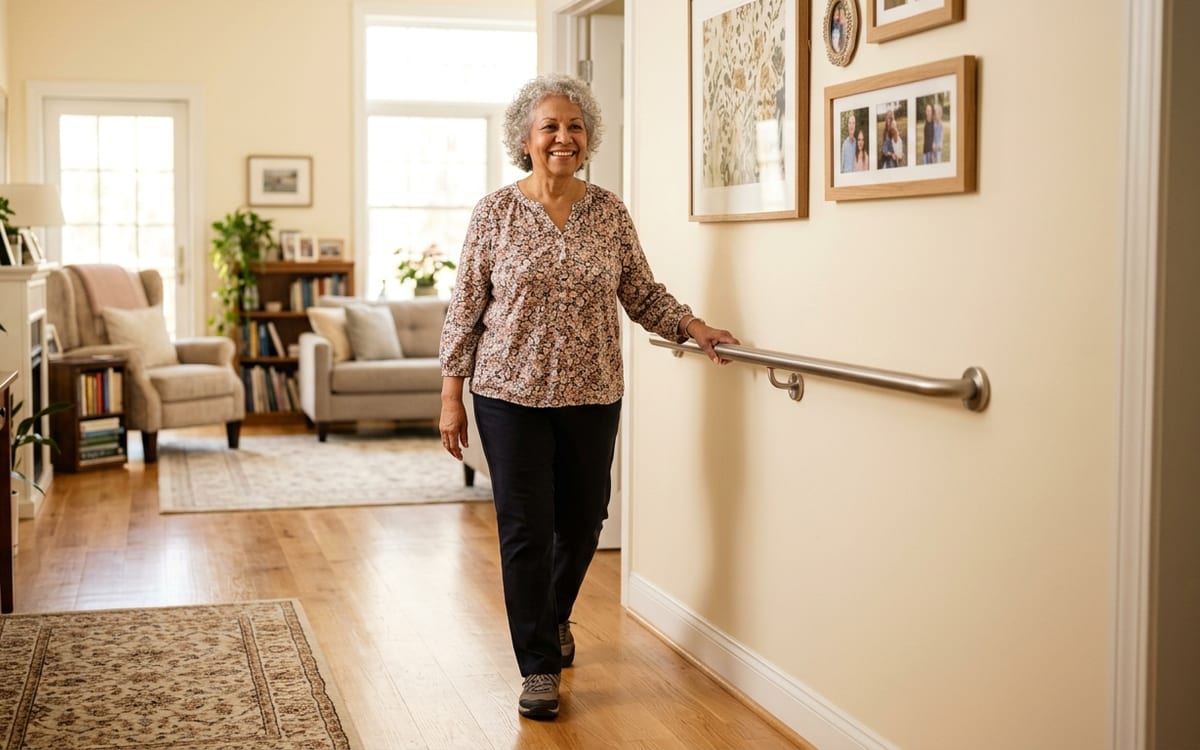
Ask almost any older adult where they want to grow old and the answer is the same: right here, in my own home. The good news is that staying home is realistic for far more people than you'd guess. The catch is that the home itself usually needs a little attention first. A house that worked perfectly for a sprightly sixty-year-old can quietly turn into an obstacle course at eighty.
The encouraging part is that most of the fixes are simple and inexpensive. You don't need a full renovation. You need a clear-eyed walk through the house, an honest look at where the risks hide, and a willingness to make a handful of practical changes. Here's how to do it, room by room.
Start with the floors
Falls are the single biggest threat to a senior living at home, and the floor is where most of them happen. Before anything else, deal with what's underfoot. Those scatter rugs that have been in the hallway for thirty years? They're a leading cause of trips. Either tape them down firmly or get rid of them. Same goes for any cord stretched across a walkway, magazine stacks, or the clutter that tends to accumulate along the edges of a room.
Walk the main paths your loved one travels every day — bed to bathroom, bedroom to kitchen, the route to the front door — and clear them completely. The goal is a straight, unobstructed line they could navigate even half-asleep at 3 a.m. While you're at it, check that these paths are wide enough for a walker if one's in the picture now or might be later.
Make the bathroom a priority
If you only have the budget and energy to fix one room, make it the bathroom. It's the most dangerous room in the house for older adults — hard surfaces, water, and the awkward business of getting in and out of a tub all in one small space. The two highest-value additions are grab bars and non-slip surfaces.
Install grab bars by the toilet and inside the shower or tub, anchored properly into the wall studs — not the towel rack, which will pull right out when someone leans on it in a panic. Add a non-slip mat inside the tub and a rug with a rubber backing outside it. For many seniors, a shower chair and a handheld showerhead transform bathing from a daily gamble into something safe and even pleasant. A raised toilet seat makes sitting and standing far easier on stiff knees and hips.
Light it up
Aging eyes need far more light than younger ones, and poor lighting turns ordinary spaces into hazards. Go room by room and brighten things up. Swap dim bulbs for brighter ones. Put nightlights along the path from the bedroom to the bathroom, since that midnight trip is when so many falls happen. Make sure every staircase is well lit at both the top and bottom, and that light switches are easy to reach as you enter a room — no fumbling in the dark.
Motion-sensor lights are a small purchase that pays off enormously. Place them in hallways, bathrooms and entryways so a light comes on automatically the moment your loved one moves, with no switch to find.
The kitchen and everyday reach
Kitchens hide a sneaky hazard: the habit of climbing and stretching for things. Reorganize so that the items your loved one uses every day — favorite mug, plates, the kettle, common foods — live on the shelves between hip and shoulder height. Nothing important should require a step stool or a deep bend. If they have to climb to reach the everyday dishes, it's only a matter of time before there's a fall.
While you're in there, check that the stove is in good shape and consider an automatic shut-off device if forgetfulness is a concern. Keep a working fire extinguisher within easy reach and test the smoke and carbon monoxide detectors. These are five-minute jobs that occasionally save a life.
The bedroom and getting around
In the bedroom, the height of the bed matters more than people think. If it's too high or too low, getting in and out becomes a struggle and a fall risk. Aim for a height where your loved one can sit on the edge with their feet flat on the floor. Keep a lamp and a phone within arm's reach of the bed, so they never have to cross a dark room to answer a call or get the light.
Think about the path through the whole house, too. Can a walker or wheelchair make it through the doorways and around the furniture if it comes to that? Sometimes simply moving a coffee table or rearranging a couch opens up a route that would otherwise be impossible. Sturdy handrails on both sides of any staircase are non-negotiable.
Don't forget the entryway and outdoors
Families tend to focus on the inside of the house and overlook the places where it meets the outside world — and those transition points cause a surprising number of falls. Start at the front door. Is there a step or threshold to navigate? A sturdy handrail on at least one side of any exterior steps makes a real difference, and so does making sure the entrance is well lit for evening arrivals.
Uneven walkways, cracked pavers and that one loose paving stone everyone's learned to step over are exactly the kind of thing that trips an older adult carrying groceries. Walk the path from the driveway or mailbox to the door and fix or flag anything uneven. In our part of Florida, sudden afternoon rain leaves walkways slick, so a non-slip surface or a small covered area by the door is more than a luxury.
If your loved one still enjoys time in the yard or garden — and many do, for good reason — make sure they have a stable place to sit, easy access to water, and shade. Staying connected to the outdoors is good for body and spirit; it just needs to be set up so it's safe.
Plan for the moment something goes wrong
Even the safest home can't prevent every emergency, so it's worth planning for one. A medical alert system — the kind worn as a pendant or wristband — means your loved one can summon help even if they've fallen and can't reach a phone. Post emergency numbers somewhere obvious. Make sure a spare key is with a trusted neighbor or in a lockbox so help can actually get in the door.
And be honest with yourself about the limits of home modifications. Grab bars and good lighting prevent a lot of accidents, but they don't replace a human being. For some seniors, the safest setup is a modified home plus a caregiver for the riskiest moments — bathing, the overnight hours, the times when being alone is simply too dangerous. There's no shame in that combination; it's often exactly what makes aging in place work.
A simple place to begin
You don't have to tackle all of this in a weekend. Start with the highest-risk areas — the floors and the bathroom — and work outward from there. Even a single afternoon spent clearing walkways, installing a couple of grab bars and adding some nightlights can dramatically cut the odds of a serious fall.
If you're not sure where the real risks are in your loved one's home, a fresh set of experienced eyes helps. We do home safety walk-throughs as part of getting to know a new client, and it's remarkable how often a few small, cheap changes make the difference between a home that's a hazard and one that's a safe place to grow old.
Frequently asked questions
What's the single most important home safety change for a senior?
How much does it cost to make a home safer for aging in place?
Are home modifications enough to keep my parent safe alone?
What should I fix first if I only have one afternoon?
Can someone assess my parent's home for safety risks?
Caring for an aging loved one? Request a free consultation and we'll help you build a plan that fits your family.