How Companion Care Improves Senior Well-Being
May 29, 2026 · Administrator · Updated June 2, 2026
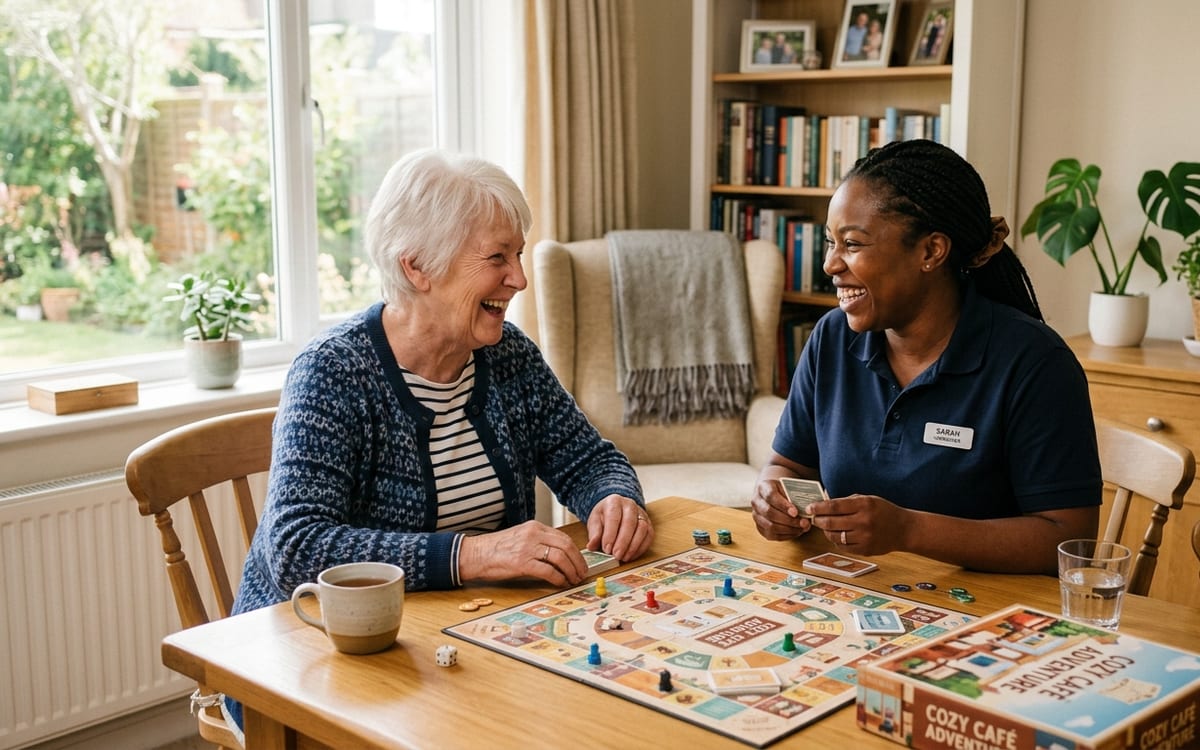
Ask most people what home care involves and they'll describe a checklist — help with bathing, meals, cleaning, getting to appointments. All of that matters. But spend any time around seniors who live alone and you start to see a different kind of need, one that doesn't show up on any task list. They're hungry for company. For someone to talk to. For a reason to get dressed and look forward to the afternoon.
That's what companion care is built for, and it's easy to underestimate until you've watched what it does. We've seen quiet, withdrawn clients come back to life over a few weeks of regular visits — not because anyone fixed a medical problem, but because someone showed up, sat down, and genuinely wanted to hear about their day.
Loneliness does real damage
It's tempting to file loneliness under "sad but harmless." The research says otherwise. Chronic isolation in older adults has been tied to higher rates of depression, faster memory decline, weakened immune function, and even a measurably higher risk of heart disease and early death. One widely cited study found that prolonged loneliness can be roughly as harmful to health as smoking. That's not a metaphor — it's a serious medical risk hiding behind a quiet living room.
And it's more common than most families realize. A senior can look "fine" on a quick phone call and still be going days at a time without a real conversation. The spouse has passed. Friends have moved, or died, or can no longer drive. The kids are busy with their own lives three states away. The isolation builds quietly, and by the time anyone notices, it's already taking a toll on both mind and body.
What a companion actually does
Companion care is simple on paper: a caring person spends regular time with your loved one. What that looks like in practice depends entirely on the senior. For one client it might be a standing Tuesday game of gin rummy and a walk around the block. For another it's working through a photo album and hearing the stories behind each picture, or getting help writing letters to grandkids, or just having someone in the kitchen to chat with while lunch comes together.
The activities are almost beside the point. What's really happening is connection. A companion notices when your mother seems a little off, remembers that her sister's birthday is coming up, laughs at the same old joke she's told a dozen times. Over weeks and months, that turns into a real relationship — and for someone who's been spending most of their hours alone, a real relationship changes everything.
The benefits show up faster than you'd think
Families are often surprised by how quickly things improve once regular companionship is in place. Here's what tends to shift:
- Mood lifts. Having something to look forward to is a powerful antidepressant. Clients start getting dressed, fixing their hair, and waiting by the window because they know their companion is coming.
- The mind stays sharper. Conversation, storytelling, games and puzzles all keep the brain working. Social engagement is one of the few things consistently linked to slower cognitive decline.
- They eat and move more. People eat better with company than alone, and a companion who suggests a short walk or a little gardening gets a senior moving in ways they wouldn't bother to on their own.
- Someone's keeping watch. A familiar companion is often the first to catch a new health concern — a cough that won't quit, a bruise, a bit of confusion — long before it becomes a crisis.
It helps the whole family, not just the senior
There's a quieter benefit that doesn't get talked about enough. When you're the adult child carrying the worry, knowing that someone is with your parent a few times a week changes your whole week, too. You stop lying awake wondering if they've spoken to another human being. You get your phone calls back as conversations about life instead of frantic check-ins. And if you've been the one providing all the company yourself, a companion gives you room to breathe without guilt.
This is especially true for families spread across the country. Distance makes the loneliness worse on both ends — your parent feels forgotten, and you feel helpless. A trusted companion bridges that gap. They become your eyes and ears, and they give your loved one the steady, in-person connection that a phone screen never quite manages.
What it does for early memory loss
Companionship is especially valuable for seniors in the early and middle stages of memory loss, and it's worth saying why. When someone is starting to lose track of time, names and routines, the world gets confusing and a little frightening. A familiar companion who shows up on a predictable schedule becomes an anchor — a steady, calming presence in a day that might otherwise feel unmoored.
The right activities help, too. Looking through old photographs, listening to the music of their youth, or telling well-worn stories taps into long-term memories that often stay vivid long after recent ones fade. Those moments aren't just pleasant; they're genuinely good for the brain, and they let a person who's losing so much still feel capable and connected. A good companion learns to meet your loved one where they are — never quizzing or correcting, just gently joining them in the present moment.
It also buys families crucial information. Because a companion sees your loved one regularly, they notice the subtle progression — more repetition, new confusion, a missed meal — and can flag it early, when there's still time to plan rather than react. For families wrestling with a dementia diagnosis, that steady, caring set of eyes is worth more than almost anything.
Is it the right fit?
Companion care tends to be the right starting point when a senior is basically managing day to day but is clearly alone too much. Maybe they don't need hands-on help yet — they can dress and bathe fine — but the house is too quiet and the days run together. It's also a gentle way to introduce care to a parent who bristles at the idea of "needing" anyone. A friendly visitor is a lot easier to accept than a caregiver, and it often opens the door to more support down the road, if that day comes.
The one thing that makes or breaks companion care is the match. A companion who shares your loved one's interests, faith, sense of humor or background will click in a way that a random assignment never will. That's why it's worth taking the time to pair thoughtfully rather than just filling a slot.
It's also worth being patient through the first few visits. A lifelong habit of self-reliance doesn't melt away overnight, and some seniors are guarded at first — they've been alone a while, and trust takes time. Nearly always, though, the wall comes down. By the third or fourth visit the conversation flows, the guard drops, and what started as "the person my daughter hired" quietly becomes a friend they genuinely look forward to seeing. Give the relationship a little runway and let it grow.
At the end of the day, we all want the same thing for the people we love: not just to be safe and fed, but to feel seen, valued and connected. Companionship delivers exactly that — and it turns out the human heart needs it just as much at eighty-five as it did at twenty-five.
Frequently asked questions
What's the difference between companion care and personal care?
Can companion care really help with memory and depression?
My parent is resistant to 'having a caregiver.' Will they accept a companion?
How often should companion visits happen?
How do you match a companion to my loved one?
Caring for an aging loved one? Request a free consultation and we'll help you build a plan that fits your family.